
Nutrition
Nutrition is important to fitness
Nutrition gives your body the energy it needs to do the job you want — even if you are trying to lose weight.
Skimping on nutrition can reduce muscle mass, lower bone density and cause fatigue.
This puts you at risk of injury and illness, increases recovery time, causes hormonal problems, and, for women, menstrual issues.
12 fun facts about exercising that are sure to inspire you

Music improves workout performance
Listening to music while exercising can improve work out performance by 15%.
Exercising improves brain performance
Cardiovascular exercise helps create new brain cells. This enhances brainpower and brain activity.
Working out sharpens your memory
Exercising increases the production of cells that are responsible for learning and memory.
Running burns calories!
If you run at a 10 minute per mile pace, you can burn 104.3 calories per mile.
More muscle mass = burning more fat while resting
The more muscle mass you have, the more fat your body burns while resting.
Exercise prevents signs of ageing
If you exercise 3 times a week for 45 minutes, you can help prevent signs of ageing.
A pound of muscle burns three times more calories than a pound of fat
Having more muscle than fat means you can consume more calories.
You get sick less often
Exercising regularly helps boost your immune system. This means you’ll get sick less often than people who don’t exercise.
Increases productivity
Exercising increases the number of endorphins that are released into your body and increases productivity. .
Workouts can improve the look of your skin
Sweat releases dirt through your pores, which reduces acne and breakouts. Workouts improve the overall look of your skin.
Exercising boosts self-confidence
Exercising can help ease your mind and rejuvenate your body. Working out will make you feel great and boost your confidence.
Working out enables you to sleep better
If you are someone who has trouble sleeping or staying asleep, then working out is your answer. Exercise helps to clear your head and helps you feel relaxed.
5 main types of nutrition
- Water
- Protein
- Carbohydrates
- Minerals
- Vitamins
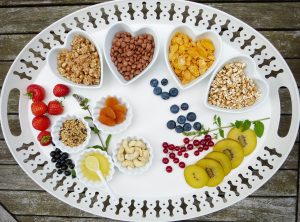
Fun Facts About Nutrition
Added Sugar is a Disaster. ...
Omega-3 Fats Are Crucial, and Most People Do Not Get Enough. ...
There is No Perfect Diet for Everyone. ...
Artificial Trans Fats Are Very Unhealthy. ...
Eating Vegetables Will Improve Your Health. ...
It is Critical to Avoid a Vitamin D Deficiency. ...
Refined Carbohydrates Are Bad for You
PRINCIPLES OF BASIC NUTRITION TO CLIENT CARE
An essential nutrient is a nutrient that the body cannot synthesize on its own — or not to an adequate amount — and must be provided by the diet. These nutrients are necessary for the body to function properly. The six essential nutrients include carbohydrates, protein, fat, vitamins, minerals and water.

Carbohydrates are the main energy source for the brain. Without carbohydrates, the body could not function properly. Sources include fruits, breads and grains, starchy vegetables and sugars. Make at least half of the grains you consume whole grains. Whole grains and fruit are full of fiber, which reduces the risk of coronary heart disease and helps maintain normal blood glucose levels.
- Carbohydrates can be grouped into two categories:
- simple and complex.
- Simple carbohydrates are sugars.
- Complex carbohydrates consist of starch and dietary fiber. Carbohydrate provides about 4 kcal (kcal = kilocalories = Calories) per gram (except for fiber) and is the energy that is used first to fuel muscles and the brain.
- Soluble fiber found in (fruits, legumes, nuts, seeds, brown rice, and oat, barley and rice brans) lowers blood cholesterol and helps to control blood sugar levels while providing very little energy. Insoluble fiber (wheat and corn bran, whole-grain breads and cereals, vegetables, fruit skins, nuts) doesn’t provide any calories. It helps to alleviate digestive disorders like constipation or diverticulitis and may help prevent colon cancer. Most calories (55-60%) should come from carbohydrates. Sources of carbohydrates include grain products such as breads, cereals, pasta, and rice as well as fruits and vegetables.
Protein is the major structural component of cells and is responsible for the building and repair of body tissues. Protein is broken down into amino acids, which are building blocks of protein. Nine of the 20 amino acids, known as essential amino acids, must be provided in the diet as they cannot be synthesized in the body. Ten to 35 percent of your daily calories should come from lean protein sources such as low-fat meat, dairy, beans or eggs.
Protein from food is broken down into amino acids by the digestive system. These amino acids are then used for building and repairing muscles, red blood cells, hair and other tissues, and for making hormones. Adequate protein intake is also important for a healthy immune system. Because protein is a source of calories (4 kcal per gram), it will be used for energy if not enough carbohydrate is available due to skipped meals, heavy exercise, etc. Main sources of protein are animal products like meat, fish, poultry, milk, cheese and eggs and vegetable sources like legumes (beans, lentils, dried peas, nuts) and seeds.
Fat is an energy source that when consumed, increases the absorption of fat-soluble vitamins including vitamins A, D, E and K. Twenty to 35 percent of your daily intake should come from fat. Choose healthy options such as omega-3-rich foods like fish, walnuts and vegetable-based oils. Omega-3s help with development and growth. Limit intake of saturated fats such as high-fat meats and full-fat dairy. Other smart choices include nuts, seeds and avocado.
The fat in food includes a mixture of saturated and unsaturated fat. Animal-based foods such as meats and milk products are higher in saturated fat whereas most vegetable oils are higher in unsaturated fat. Compared to carbohydrate and protein, each gram of fat provides more than twice the amount of calories (9 kcal per gram). Nevertheless, dietary fat does play an important role in a healthy diet. Fat maintains skin and hair, cushions vital organs, provides insulation, and is necessary for the production and absorption of certain vitamins and hormones. Nutrition guidelines state that Canadians should include no more than 30% of energy (calories) as fat and no more than 10% of energy as saturated fat.
Vitamin C is necessary for the synthesis of collagen, which provides structure to blood vessels, bone and ligaments. Rich sources include citrus fruits, strawberries and peppers. Folate, found in foods, helps to prevent birth defects. Pregnant women or women who plan to become pregnant should speak with their physician about taking a folic acid supplement, the synthetic form of folate, in addition to their diet. Vitamin D helps to maintain calcium homeostasis. It can be found in food sources or synthesized by the sun. Vitamins help to regulate chemical reactions in the body.
There are 13 vitamins, including vitamins A, B complex, C, D, E, and K. Because most vitamins cannot be made in the body, we must obtain them through the diet. Many people say that they feel more energetic after consuming vitamins, but vitamins are not a source of energy (calories). Vitamins are best consumed through a varied diet rather than as a supplement because there is little chance of taking too high a dose.
Sodium helps to maintain fluid volume outside of the cells and helps cells to function normally. Keep intake under 2,400 milligrams per day. Potassium maintains fluid volume inside and outside of cells and prevents the excess rise of blood pressure with increased sodium intake. Rich sources include bananas, potatoes and tomatoes. Calcium helps to maintain and build strong bones and teeth. Include three servings of calcium-rich foods per day including milk, low-fat cheese and yogurt.
Minerals are components of foods that are involved in many body functions. For example, calcium and magnesium are important for bone structure, and iron is needed for our red blood cells to transport oxygen. Like vitamins, minerals are not a source of energy and are best obtained through a varied diet rather than supplements.
Water is a vital nutrient for good health. Most of our body weight (60-70%) is made up of water. Water helps to control our body temperature, carries nutrients and waste products from our cells, and is needed for our cells to function.
It is recommended that adults drink 8 glasses of fluid daily (or more in hot weather or during physical activity). This fluid does not have to be water alone. It can also be obtained from juice, milk, soup, and foods high in water such as fruits and vegetables. Caffeine-containing beverages (coffee, tea, and cola) don’t count because caffeine is a diuretic, making us lose water.
A great plus for water in comparison to the other fluids is that it hydrates our body without extra calories.
Food intolerances affect nearly everyone at some point. People often have an unpleasant reaction to something they ate and wonder if they have a food allergy. One out of three people either say that they have a food allergy or that they modify the family diet because a family member is suspected of having a food allergy.
- Loss of appetite;
- Reduced sense of taste;
- Loss of dentation;
- Denture problems;
- Dehydration;
- Malnutrition